Mac Studio M4 Max vs Strix Halo: Which 128GB Box Actually Runs Your Local LLM Faster?
Tom's Hardware measured the M4 Max at roughly 1.6× a Strix Halo box on tokens/sec. But a 128GB Strix Halo machine starts at $3,449. Here's the bandwidth math, the per-GB math, and the prefill caveat that decides which one you should actually buy.
DataHardware Team
Our Top Pick
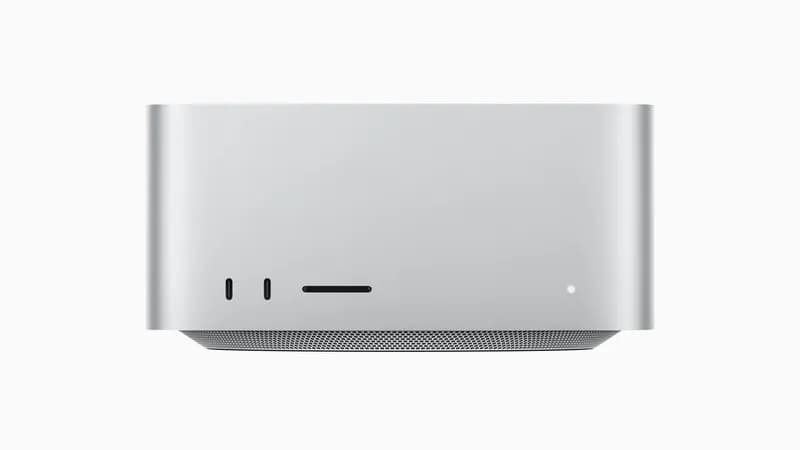
Apple Mac Studio M4 Max
$2,499+ — discontinuedSuperseded (2026-09-27): Apple discontinued the Mac Studio M4 Max on 2026-09-22, replacing it with the M5 Max (614 GB/s, from $2,499). This page remains the head-to-head for anyone shopping the secondary market — for a current buying decision, read Mac Studio M5 Max vs Strix Halo.
Quick answer: Buy the Mac Studio M4 Max if you want the fastest tokens per second, and a 128GB Strix Halo box if you want the most gigabytes per dollar. Tom's Hardware's head-to-head local-AI testing measured the M4 Max averaging roughly 1.5× NVIDIA's GB10 and 1.6× a Strix Halo machine on token generation — the payoff for 546 GB/s of memory bandwidth against 273 GB/s (GB10) and 256 GB/s theoretical / ~215 GB/s real (Ryzen AI Max+ 395). The counterweight is price: the Framework Desktop puts 128GB on your desk for $3,449 and the Beelink GTR9 Pro for $4,349, versus roughly $3,699 for the M4 Max configuration Tom's Hardware tested. So the trade is about 1.6× the throughput for about 1.9× the price — and one wrinkle almost nobody has updated for: the 2026 DRAM spike pushed the GMKtec EVO-X2 to $3,649, which erases the AMD value argument entirely at that particular SKU.
The one number that decides this: memory bandwidth
Every honest version of this comparison starts in the same place, and it is not the CPU core count or the TOPS figure on the box. Once a model fits in memory, the thing that caps how fast it writes tokens is memory bandwidth. Generation re-reads weights from memory for every single token produced, so tokens per second is, to a first approximation, bandwidth divided by bytes-read-per-token. We unpack the mechanism properly in unified memory vs VRAM for local AI; here is the scoreboard.
| Platform | Memory bandwidth | Max unified memory | Stack |
|---|---|---|---|
| Apple M3 Ultra (Mac Studio) | 819 GB/s | 96GB new (256/512GB pulled) | MLX / llama.cpp |
| Apple M4 Max (Mac Studio) | 410 – 546 GB/s | Up to 128GB | MLX / llama.cpp |
| NVIDIA GB10 (DGX Spark, Ascent GX10) | 273 GB/s | 128GB | CUDA-native |
| Apple M4 Pro (Mac mini) | 273 GB/s | Up to 64GB | MLX / llama.cpp |
| AMD Ryzen AI Max+ 395 ("Strix Halo") | 256 GB/s theoretical (~215 GB/s real) | 128GB (~96GB GPU-allocatable) | ROCm / Vulkan / llama.cpp |
Two details in that table matter more than the headline gap.
First: 546 GB/s is not the price of admission to a Mac Studio. That figure belongs to the 40-core-GPU M4 Max. The lower bin runs at 410 GB/s, and the entry Mac Studio does not ship with 128GB. If you buy the base configuration expecting the benchmark numbers, you bought the wrong SKU — this is the single most common way people overpay and under-receive in this comparison.
Second: the Strix Halo number has two versions and you should quote the pessimistic one. The spec sheet says 256 GB/s; independent llama.cpp testing lands nearer ~215 GB/s in practice. Our Strix Halo tokens-per-second deep dive works entirely from the real-world figure, and so should you.
Line those up and the theoretical ratio is stark: 546 ÷ 215 ≈ 2.5×. Hold onto that number, because the measured result is considerably smaller — and the gap between those two facts is the most useful thing in this article.
What the benchmarks actually show
Attribution first, because this is the load-bearing evidence in the post and it is not ours. The figures below are Tom's Hardware's measurements from its Apple Silicon local-AI testing with the Mac Studio and M4 Max, run head-to-head against NVIDIA's GB10 and AMD's Strix Halo. We have not reproduced them on our own bench. Treat them as one credible third-party data set, not as a universal spec.
| Comparison | Bandwidth ratio (theoretical) | Measured token-generation ratio | Source |
|---|---|---|---|
| M4 Max vs GB10 (DGX Spark / Ascent GX10) | 546 ÷ 273 = 2.0× | ~1.5× | Tom's Hardware, measured |
| M4 Max vs Strix Halo (Ryzen AI Max+ 395) | 546 ÷ ~215 ≈ 2.5× | ~1.6× | Tom's Hardware, measured |
The interesting result is the shortfall. On paper the M4 Max should be 2.0–2.5× faster; measured, it averages 1.5–1.6×. Bandwidth sets the ceiling, but nothing hits its ceiling. Real decode throughput also depends on runtime maturity, quantization format, KV-cache handling, batch behaviour, and how well a given kernel keeps the memory controller saturated — and llama.cpp's Vulkan and ROCm back-ends on Strix Halo have improved fast enough to claw back a meaningful slice of the theoretical deficit.
The practical translation, in plain terms: a task that takes the Mac 60 seconds takes the Strix Halo box roughly 95. That is a real and repeatable difference. It is not the order-of-magnitude difference the bandwidth spec implies, and it is not the difference between "usable" and "unusable" — both platforms are firmly in usable territory for interactive work.
"Memory bandwidth is the right first-order model for decode speed, and it is a bad second-order model. The M4 Max has 2.5× the bandwidth of a Strix Halo box and Tom's Hardware measured 1.6× the tokens per second. Anyone quoting the bandwidth ratio as the performance ratio is selling you a spec sheet, not a result."
One more scoping note that keeps this honest: these figures describe decode — the token-by-token generation phase. They say nothing about prefill, which behaves completely differently and gets its own section below.
Where Strix Halo closes the gap: price per gigabyte
Now the other axis, and the one Apple-side coverage almost never runs. If you are buying a 128GB box, you are buying capacity. So price it that way.
| Box | Price | Unified memory | Cost per GB | Bandwidth |
|---|---|---|---|---|
| Mac mini M4 Pro | $1,599 (final, discontinued) | Up to 64GB | ~$25.0 | 273 GB/s |
| Framework Desktop | $3,449 | 128GB | ~$26.95 | 256 GB/s (~215 real) |
| GMKtec EVO-X2 | $3,649 | 128GB | ~$28.51 | 256 GB/s (~215 real) |
| Mac Studio M4 Max (as tested) | ~$3,699 (Tom's Hardware test unit; Apple's own M4 Max Studio started at $2,499 and is discontinued) | 128GB | ~$28.90 | 546 GB/s |
| Minisforum MS-S1 Max | $3,799 | 128GB | ~$29.68 | 256 GB/s (~215 real) |
| Beelink GTR9 Pro | $4,349 | 128GB | ~$33.98 | ~256 GB/s spec |
| NVIDIA DGX Spark | $4,699+ | 128GB | ~$36.71 | 273 GB/s |
| Mac Studio M3 Ultra | $5,299 (final, discontinued) | 96GB | ~$55.20 | 819 GB/s |
Price caveat, and it is not boilerplate: the Strix Halo and NVIDIA figures were re-verified against live listings on 2026-09-20, the Apple ones on 2026-09-22, and this category re-prices weekly. Apple has now discontinued both Mac Studio configurations in this table; the ~$3,699 M4 Max figure is the tested 128GB machine Tom's Hardware bought, not a price you can pay today. Verify everything at checkout.
Against the Framework Desktop at $3,449 the arithmetic no longer resembles the 2025 version of this comparison: roughly 1.6× the tokens for roughly 1.07× the price. The DRAM spike repriced the AMD side and left Apple's tested config almost level with it, so the throughput premium the Mac used to charge has very nearly vanished. That is the single biggest change to this matchup in 2026, and most write-ups have not caught it.
And then look at the EVO-X2 row, because this is the part every other comparison on the internet is currently getting wrong. At $3,649, the flagship Strix Halo box costs ~$28.51/GB against the Mac's ~$28.90/GB — a gap of about 1%, for 1.6× less measured throughput. The standard "AMD is the value pick" conclusion that most 2025-era write-ups still assert is not true of that SKU any more. It was true at the EVO-X2's ~$1,999 pre-sale price; the 2026 DRAM spike killed it. Our post on why local-AI mini PC prices doubled in 2026 has the full SKU-by-SKU damage and the TrendForce forecast behind it.
So the accurate late-2026 statement is narrower still: exactly one Strix Halo box is now cheaper per gigabyte than the tested Mac — the Framework Desktop, at ~$26.95/GB against ~$28.90/GB, a margin of about 7%. The EVO-X2 is level with it, and the MS-S1 Max and GTR9 Pro are both dearer per gigabyte than the Mac while generating fewer tokens. The "AMD is the value pick" line survives at one SKU, not across the category.

Prefill and time-to-first-token — the metric nobody quotes
Everything above is decode. There is a second phase, it behaves under opposite rules, and leaving it out is how a benchmark-accurate comparison still produces a bad purchase.
Prefill is the model reading your prompt before it writes anything — your question, the retrieved RAG documents, the code file, the system prompt. It is highly parallel matrix math over the whole prompt at once, which makes it compute-bound: it wants FLOPs, not GB/s. Decode wants bandwidth. These are different appetites, and a machine can be strong at one and weak at the other.
Strix Halo is the textbook case. Its Radeon 8060S iGPU (40 CU, RDNA 3.5) is roughly RTX 4070-mobile-class compute bolted to server-class memory capacity, and it shows: in gpt-oss 120B testing from hardware-corner.net, Strix Halo prefills at roughly 340 tok/s versus ~1,723 tok/s on a DGX Spark — about 5× slower — while decode between those two is a near tie. Our prefill and time-to-first-token deep dive covers what that costs you in wall-clock seconds and the three configuration levers that recover some of it.
Now the honest part: we do not have a comparable M4 Max prefill figure in hand, and we are not going to invent one. The Tom's Hardware data we are citing is decode-side. So the correct statement is that the M4 Max's prefill position versus Strix Halo is unmeasured here, and anyone telling you a clean ratio without a source is guessing.
What we can say is what would move it, so you can reason about your own workload. Prefill scales with raw parallel compute, and the M4 Max's 40-core GPU is a considerably larger compute block than a 40-CU RDNA 3.5 iGPU, so the directional expectation is that Apple prefills faster — but direction is not a number, and the size of the gap depends on how well MLX and llama.cpp's Metal back-end saturate that GPU on long prompts. If your work is long-context RAG, whole-repo code analysis, or big agent contexts, this unmeasured axis may matter to you more than the measured decode gap does, and it is worth benchmarking your own prompts before spending $3,700.
Software: MLX vs ROCm vs CUDA
This is a workflow constraint, not a performance one, and people routinely conflate the two.
| Platform | Inference stack | Beyond inference | Practical read |
|---|---|---|---|
| Apple M4 Max | MLX, Ollama, llama.cpp (Metal) | MLX LoRA fine-tuning; no CUDA, ever | Works day one. Least setup friction of the three. |
| Strix Halo | llama.cpp (Vulkan / ROCm), LM Studio, Ollama | ROCm — improving fast, still rough | Fine for inference. Expect friction outside it. |
| NVIDIA GB10 | Full CUDA stack, DGX OS | Everything, natively | The only one where "the script assumes NVIDIA" is a non-issue. |
Apple's advantage here is underrated by PC-side coverage: MLX plus Ollama is genuinely the shortest path from unboxing to a running local model, and it is a first-party framework maintained by the vendor whose silicon you bought. Its ceiling is equally real — the moment your workflow depends on a CUDA-only library, macOS has no answer at any price.
AMD's side has improved more than its reputation suggests. AMD's own developer playbooks now cover ROCm on Strix Halo directly, and the community work catalogued at the Strix Halo Wiki and the strix-halo-guide repository has turned llama.cpp on the 8060S into a well-trodden path rather than an expedition. For inference specifically, the software gap between Apple and AMD in 2026 is much smaller than it was in 2025. For anything else — training, exotic quantization, research code — it is not.
If CUDA is a hard requirement, neither box on this page is your answer and you should read DGX Spark vs Strix Halo instead.

The memory ceilings are not equal
Both platforms say "128GB," and the sentence means different things on each side.
- Mac Studio M4 Max — 128GB at up to 546 GB/s. That is the top of the M4 Max line. macOS lets you raise the GPU's share of the unified pool, and the whole 128GB is addressable memory rather than a partitioned allocation you set in firmware.
- Strix Halo — 128GB, but roughly 96GB GPU-allocatable. The catalog spec on the EVO-X2, Framework Desktop, MS-S1 Max and HP Z2 Mini G1a is "up to 96GB GPU-allocatable," and getting there means BIOS and driver work rather than a checkbox. Our Strix Halo VRAM allocation guide walks the actual procedure.
- Mac Studio M3 Ultra — 819 GB/s, but 96GB. The bandwidth king of the category, and the most damaged config in it: Apple pulled the 256GB and 512GB options during the DRAM shortage, so the last machine it sold was 96GB at $5,299, and the M3 Ultra has since been discontinued entirely in favour of an M5 Ultra at $5,499. Re-verify before ordering — availability on this row moved twice in 2026 and it is exactly the sort of thing Apple reverses without a press release.
That 128GB-versus-96GB-allocatable difference is what decides the dense-70B question. A 70B model such as Llama 3.3 70B at 4-bit is roughly 40–48GB of weights plus context, so it fits comfortably on both — the ceiling only starts to bite on 120B-class MoE models with long context, where the Mac's full 128GB has headroom the Strix Halo allocation does not.
And a caveat that applies identically to every machine here: the memory is soldered on all of them. Apple, AMD, NVIDIA — there is no upgrade path on any of these boxes. You buy the configuration you will need in three years, on day one, or you buy a different computer later. In a DRAM-spiked market that is an expensive rule, and it is not optional.

Which one to buy
Four picks, each with the trigger that should send you to it.
Fastest tokens per second: Mac Studio M4 Max
Buy the Mac Studio M4 Max if throughput is what you are actually paying for and macOS is not a blocker. It is the only machine on this page with a measured throughput lead — roughly 1.6× a Strix Halo box per Tom's Hardware — it is silent, and MLX plus Ollama is the lowest-friction software stack in local AI. Configure it deliberately: the 40-core GPU bin and 128GB of memory are what produce the 546 GB/s and the capacity; Apple's $2,499 entry price bought a different machine. Skip it if any part of your workflow needs CUDA. If you are weighing it against Apple's bandwidth flagship, see M4 Max vs M3 Ultra; the Apple Silicon hub tracks the rest of the line.
Cheapest 128GB, best for tinkering: Framework Desktop
Buy the Framework Desktop at $3,449 if gigabytes per dollar is the metric and you want Linux. It is the cheapest credible 128GB box we track, it is direct-only so it never rode the Amazon price swings, and it puts the Ryzen AI Max+ 395 on a standard mini-ITX board with open firmware. You accept ~215 GB/s real bandwidth, ~96GB GPU-allocatable, and the ROCm/Vulkan world in exchange for saving roughly $250 against the tested Mac. The EVO-X2 vs Framework Desktop comparison and our Strix Halo hub cover the other 128GB boxes on this chip.
Best price-to-I/O in a finished box: Beelink GTR9 Pro
Buy the Beelink GTR9 Pro at $4,349 — a $900 premium over the Framework, and the dearest box per gigabyte here — only if you want a machine that arrives assembled and you need the network. Dual 10GbE plus dual USB4 is rare at this size and it is the right box for pulling models off a fast NAS or wiring two machines together; the vapor-chamber cooler holds sustained ~120W inference quietly. Known issue worth pricing in: reported 10GbE NIC instability under heavy GPU load, driver-dependent. Full detail in our GTR9 Pro review.
The "do I really need 128GB?" off-ramp: Mac mini M4 Pro
Buy the Mac mini M4 Pro — $1,599 at its final pricing, now discontinued and replaced by an M5 Pro at $1,699 — if the honest answer to the capacity question is no. 64GB at 273 GB/s is more bandwidth than any Strix Halo box, it is comfortable for 30B-class models, it is silent, and it costs less than half the tested Mac Studio. A large share of people shopping this comparison are buying 128GB for a workload that peaks at 30B — our guide to the best local LLM models for a 128GB mini PC is the place to size that honestly before you spend, and the best mini PC for local LLMs in 2026 covers the tiers below this one. For the direct step-up math, see Mac mini M4 Pro vs Mac Studio M4 Max.

Bottom line
- The M4 Max is faster and the measured gap is smaller than the spec sheet. 546 GB/s against ~215 GB/s is 2.5× on paper; Tom's Hardware measured ~1.6× in tokens per second. Both numbers are true and only one of them is a result.
- Strix Halo's per-gigabyte win has narrowed to one box. The Framework Desktop at $3,449 is ~$26.95/GB against the tested Mac's ~$28.90/GB — about 7%. The EVO-X2 is level at ~$28.51/GB, and the MS-S1 Max and GTR9 Pro now cost more per gigabyte than the Mac.
- Decode is measured; prefill is not. The cited benchmarks describe token generation. If your prompts are long, benchmark first-token latency on your own workload before you decide.
- Software is a constraint, not a score. MLX is the smoothest inference path, ROCm is the improving one, CUDA is the only one that runs everything. Pick for the tools you need, not the tokens.
- Every box here has soldered memory. Buy the configuration you will need in three years, or buy a different computer in three years.
The reason this comparison stays genuinely close is that it is not a contest between a fast machine and a slow one. It is a contest between throughput per dollar and capacity per dollar, and 2026's DRAM market has been quietly moving the second one toward Apple all year. If you want the fastest tokens, the Mac Studio M4 Max earns its price. If you want the most memory for the money and you are comfortable in Linux, the Framework Desktop is still the best-value 128GB machine on the market. What you should no longer assume — the thing most of the internet has not updated — is that the AMD box is automatically the cheap one.