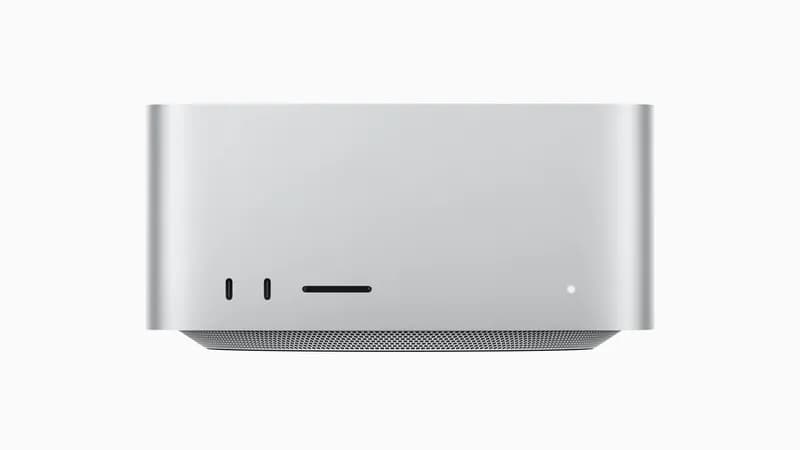
Apple Mac Studio M4 Max
$2,499+ — discontinued
The most powerful single-chip Mac for AI. Up to 128GB unified memory at up to 546 GB/s runs frontier MoE language models natively — silent, compact, and effortless for local LLM workflows with Ollama, MLX, and llama.cpp.
Affiliate links — We earn a commission on qualifying purchases at no cost to you.
Specifications
| Chip | Apple M4 Max |
| CPU Cores | 16-core |
| GPU Cores | 40-core |
| Unified Memory | Up to 128GB |
| Memory Bandwidth | 410 – 546 GB/s |
| Storage | 512GB – 8TB SSD |
Pros
- Up to 128GB at 546 GB/s — higher real bandwidth than any Strix Halo/GB10 box
- Completely silent desktop operation
- macOS + Ollama / MLX for effortless local AI
Cons
- No CUDA — limited ML framework support
- Premium Apple pricing
- Not expandable after purchase
Related Articles
How Much Context Can a 128GB Mini PC Actually Hold? The KV Cache Math Nobody Runs Before Buying
Everyone sizes a unified-memory box against model weights. Almost nobody sizes it against the KV cache — and on a 128K-token agent run, the cache is the number that decides whether the job finishes. Here's the math, box by box, plus the KV-quantization trade that makes long first prompts slower, not faster.
Best Mini PC for a Local Coding Agent in 2026 — Why Prefill, Not Tokens/Sec, Decides Your Box
A coding agent re-sends your whole repo context every single turn, which makes it a prefill-bound workload. That flips the buying logic: ~1,700 tok/s prompt processing on a GB10 box vs ~340 tok/s on Strix Halo, while generation is a near-tie. Here's the per-budget verdict, the memory math, and the boxes to skip — with the caveat that the 2026 DRAM spike has narrowed the price gap to about $1,250.
Mac Studio M4 Max vs Strix Halo: Which 128GB Box Actually Runs Your Local LLM Faster?
Tom's Hardware measured the M4 Max at roughly 1.6× a Strix Halo box on tokens/sec. But a 128GB Strix Halo machine starts at $3,449. Here's the bandwidth math, the per-GB math, and the prefill caveat that decides which one you should actually buy.
Best Local LLM Models to Run on a 128GB Mini PC in 2026 (Matched to Your Box)
You bought (or are eyeing) a 128GB unified-memory box. Here's what to actually load on it: gpt-oss 120B at ~31 tok/s, Qwen3-30B at ~100 tok/s, dense Llama 3.3 70B at ~4–6 tok/s — ranked by job, with the exact SKU for each.
Related Products
Disclosure: Some links on this page are affiliate links. We may earn a commission if you make a purchase — at no extra cost to you. This helps support our independent reviews.