Apple Mac Studio M4 Max vs Apple Mac Studio M3 Ultra for AI
A head-to-head comparison of specs, pricing, and real-world AI performance to help you pick the right hardware.
Disclosure: Some links on this page are affiliate links. We may earn a commission if you make a purchase — at no extra cost to you.
Quick Verdict
Both are excellent choices for AI. The Apple Mac Studio M4 Max comes in at a lower price and offers strong performance. The Apple Mac Studio M3 Ultra justifies its premium with higher-end specs. Choose based on your budget and whether you need the extra headroom.
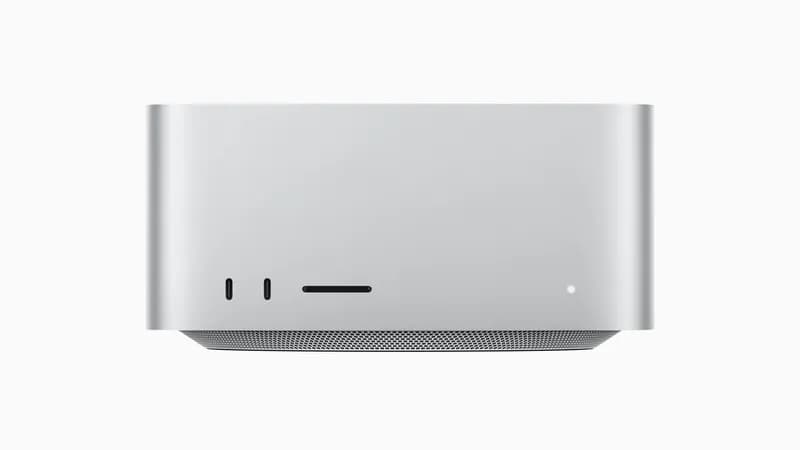
Apple Mac Studio M4 Max
$2,499+ — discontinued
The most powerful single-chip Mac for AI. Up to 128GB unified memory at up to 546 GB/s runs frontier MoE language models natively — silent, compact, and effortless for local LLM workflows with Ollama, MLX, and llama.cpp.
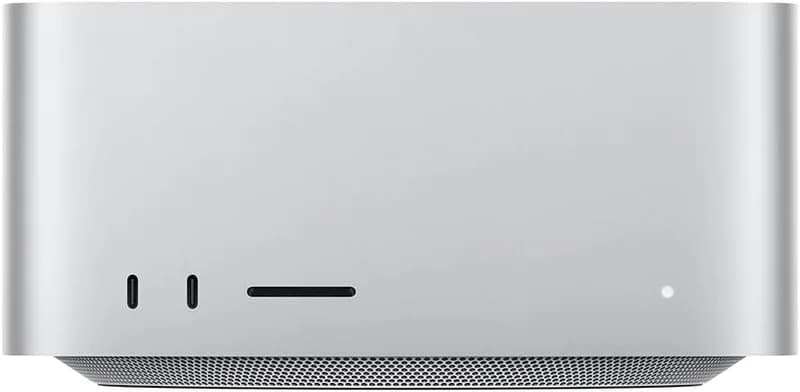
Apple Mac Studio M3 Ultra
$5,299 — discontinued
The unified-memory bandwidth king. The M3 Ultra runs at 819 GB/s — roughly 3× any Strix Halo or GB10 box — and at launch scaled to 512GB, enough to run DeepSeek R1 671B at 4-bit entirely in memory (~17–18 tok/s, under 200W). The catch as of September 2026: the 256GB and 512GB configs were pulled during the DRAM shortage, 96GB was the last config Apple sold, and Apple has now retired the M3 Ultra for the M5 Ultra — so this is a secondary-market buy. No CUDA — MLX/llama.cpp only.
Specs Comparison
| Spec | Apple Mac Studio M4 Max | Apple Mac Studio M3 Ultra |
|---|---|---|
| Price | $2,499+ — discontinued | $5,299 — discontinued |
| Chip | Apple M4 Max | Apple M3 Ultra (28-core CPU / 60-core GPU, up to 32/80) |
| CPU Cores | 16-core | — |
| GPU Cores | 40-core | — |
| Unified Memory | Up to 128GB | 96GB (256/512GB configs discontinued 2026) |
| Memory Bandwidth | 410 – 546 GB/s | 819 GB/s |
| Storage | 512GB – 8TB SSD | 1TB – 16TB SSD |
| Neural Engine | — | 32-core |
| Networking | — | 10GbE |
| I/O | — | 6× Thunderbolt 5, HDMI 2.1, SDXC |
Apple Mac Studio M4 Max
Pros
- +Up to 128GB at 546 GB/s — higher real bandwidth than any Strix Halo/GB10 box
- +Completely silent desktop operation
- +macOS + Ollama / MLX for effortless local AI
Cons
- -Discontinued by Apple in September 2026 — the M5 Max Mac Studio (from $2,499) replaced it
- -No CUDA — limited ML framework support
- -Premium Apple pricing
- -Not expandable after purchase
Apple Mac Studio M3 Ultra
Pros
- +819 GB/s — the highest-bandwidth unified-memory desktop you can buy
- +At launch, 512GB ran DeepSeek R1 671B Q4 in memory under 200W, silent
- +Thunderbolt 5 + macOS MLX-optimized stack
Cons
- -No CUDA — MLX / llama.cpp only; many AI tools assume NVIDIA
- -Retired by Apple in September 2026 (M5 Ultra replaced it) — secondary market only
- -Slow prefill/prompt-processing on long contexts vs GPU rigs
Where to Buy
Related Articles
guide
How Much Context Can a 128GB Mini PC Actually Hold? The KV Cache Math Nobody Runs Before Buying
Everyone sizes a unified-memory box against model weights. Almost nobody sizes it against the KV cache — and on a 128K-token agent run, the cache is the number that decides whether the job finishes. Here's the math, box by box, plus the KV-quantization trade that makes long first prompts slower, not faster.
guide
How Much Unified Memory Do You Actually Need for Local AI? (64GB vs 96GB vs 128GB, 2026)
Unified memory on these boxes is soldered — it is the one spec you cannot change after checkout. Here is what each capacity tier actually runs, what the 64GB tier costs you in usable GPU memory, and why the extra 64GB buys context rather than a bigger model.
guide
Strix Halo Memory Bandwidth: Why 256 GB/s Isn't 256 GB/s (2026)
AMD's Ryzen AI Max+ 395 is rated 256 GB/s. Real sustained bandwidth is around 215 GB/s — about 84% of spec. Here's where the missing 40 GB/s goes, why 32MB of Infinity Cache doesn't rescue it, and how to turn GB/s into a tokens-per-second estimate before you buy.